October 3–November 8, 2026
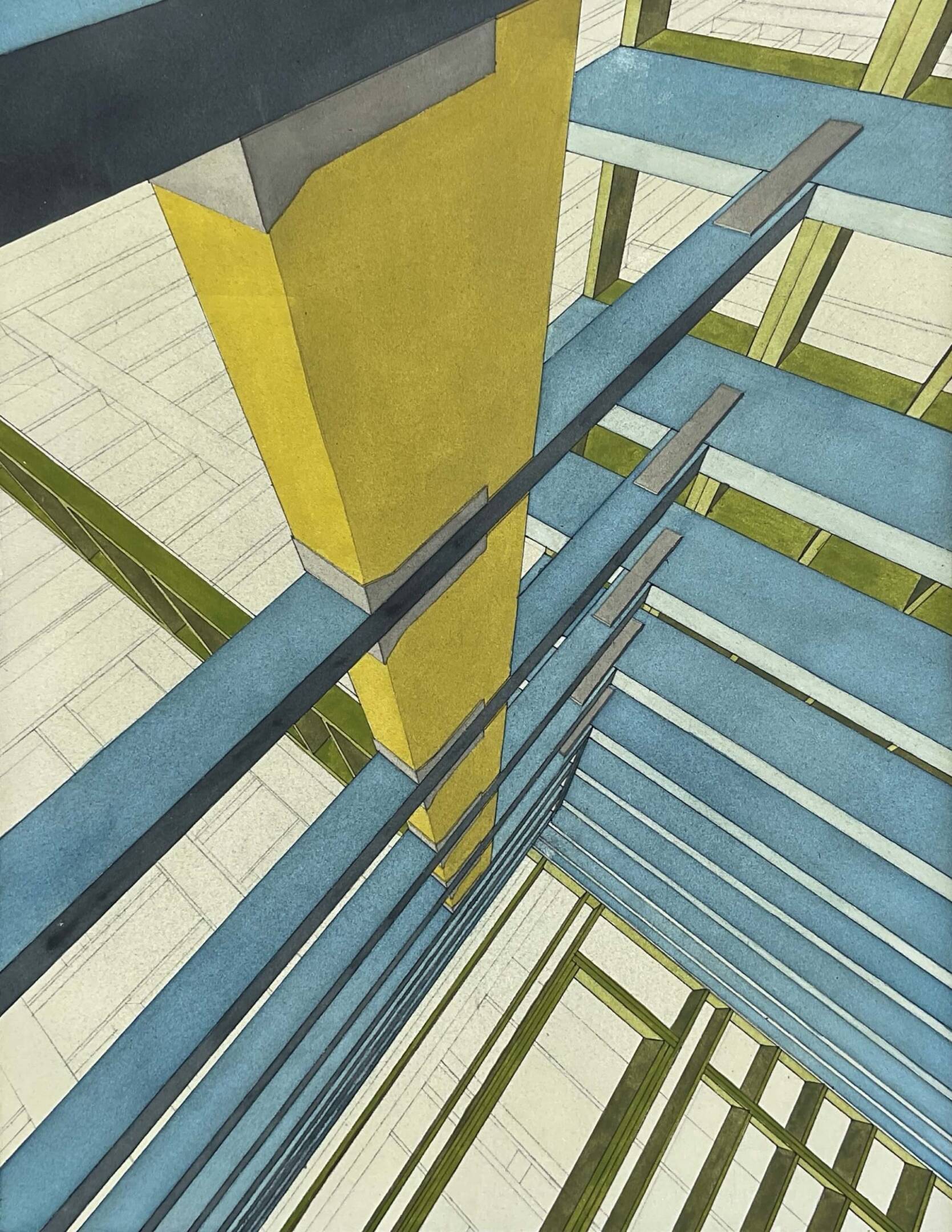
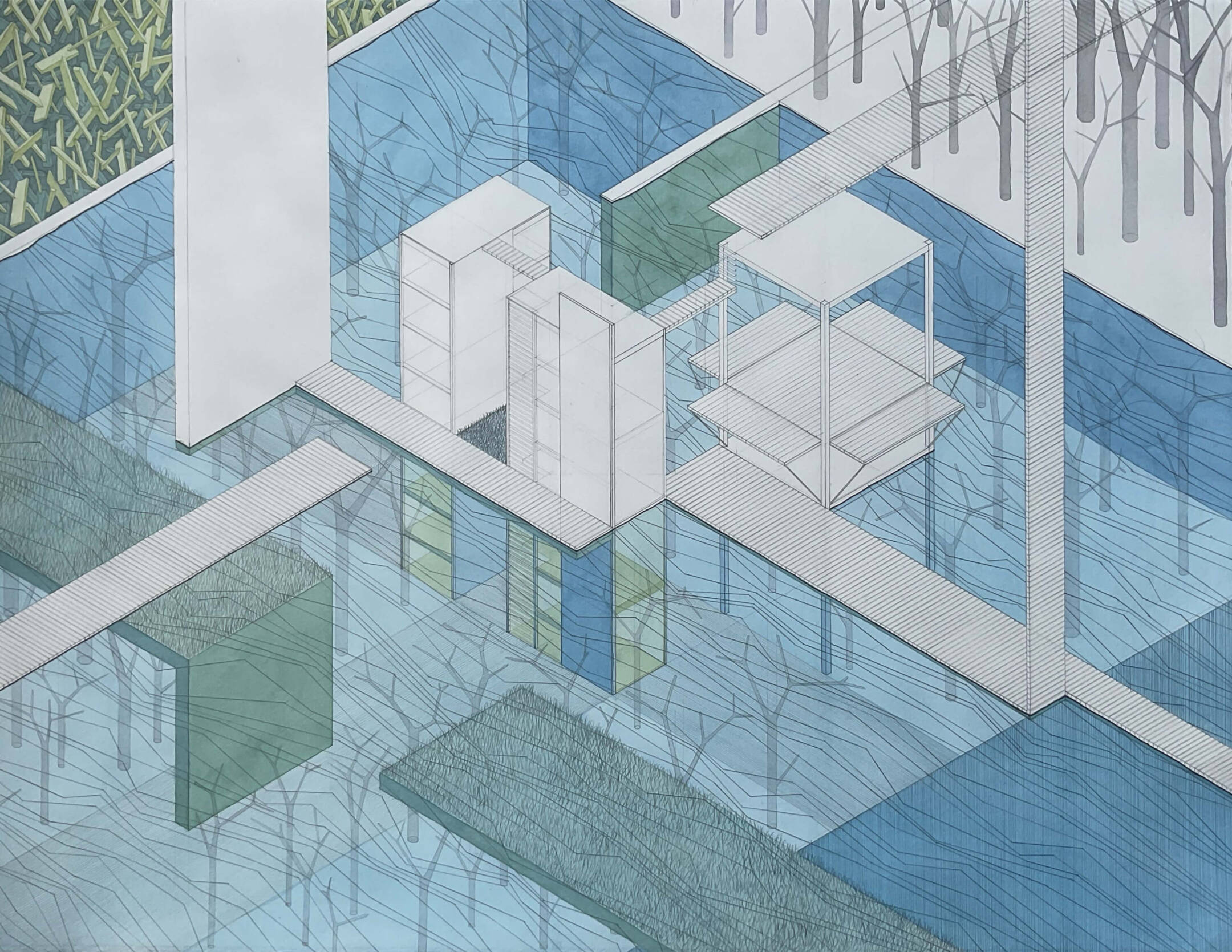
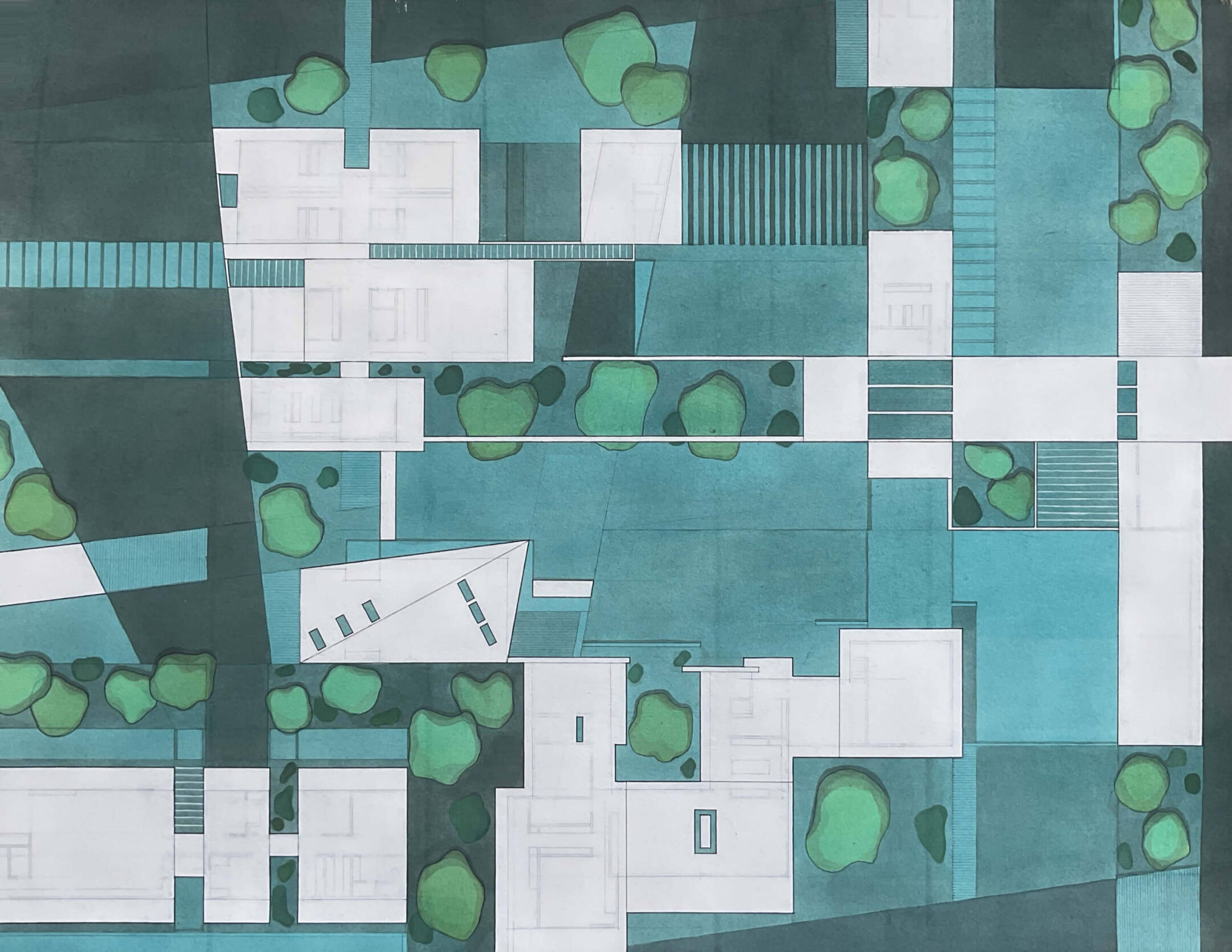
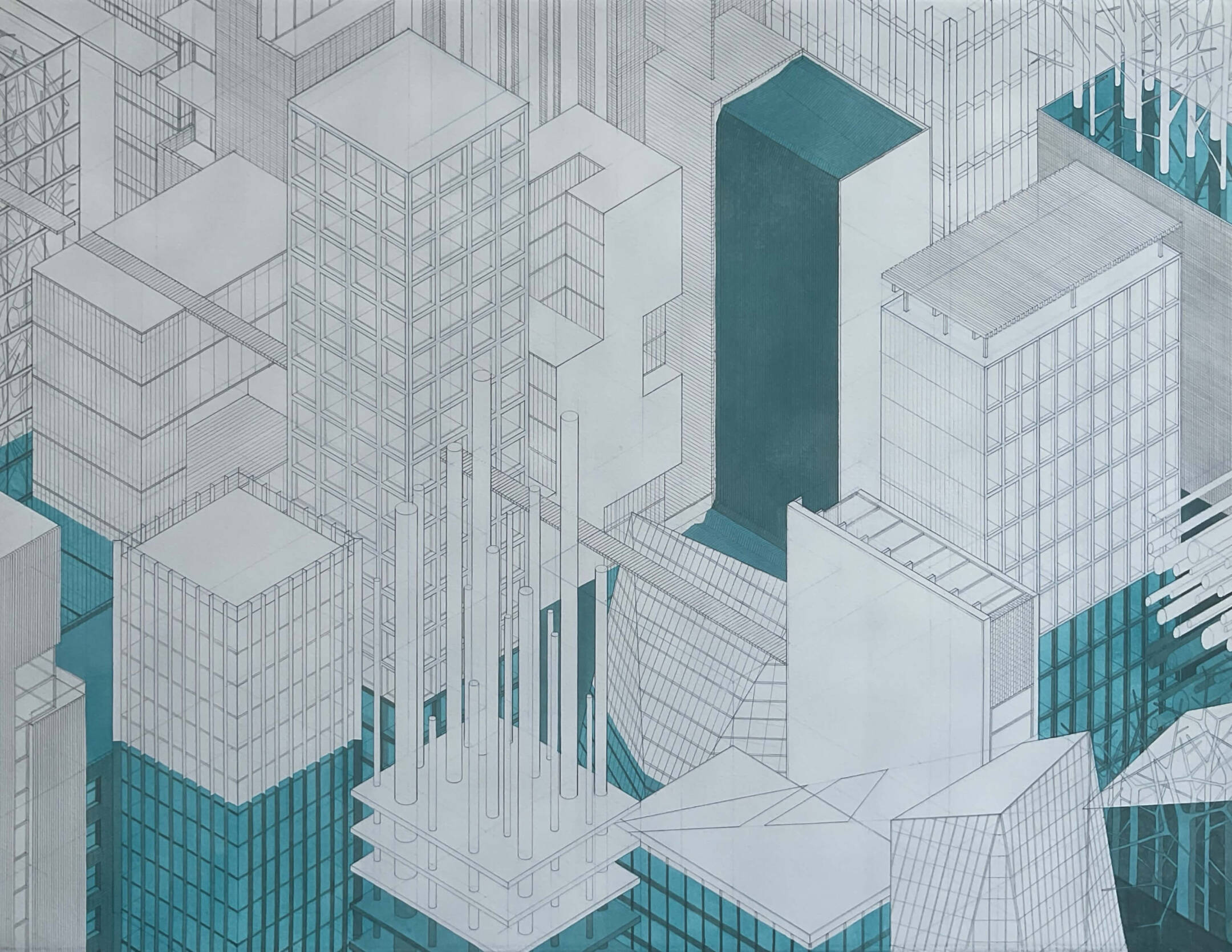
Beginning as hand-drafted architectural plans and layered with watercolor, gouache, and other techniques, these works reimagine how the built world might adapt to the changing natural world and potentially volatile natural environments
As an architect/designer of 32 years, I’ve long been conflicted with my own role in a building process that generates enormous waste and does not often have a collaborative relationship with the natural environment—houses demolished before their time, materials cut and discarded because of the standard lengths and shapes they’re milled in, trees/forests cleared for material and also land to build on, etc.
This unease shapes my work. In the past, I built art pieces directly from construction waste, using offcuts and scrap as substrates for paintings and assemblages. As my architectural practice has moved almost entirely into a paperless office, including digital drafting, and the extensive use of tablets for sketching and conceptualizing—I attempt to bring drafting itself back as an art form, layering hand-drawn architectural plans with watercolor, gouache, and other techniques.
Each piece begins as an architectural project, drafted and conceptualized with the same discipline I’d bring to a client’s home, but conceived for an imagined environment or environmental event rather than a real site. A structure rises and falls with the tides on pilings, like a dock. Rooftops and upper stories of a flooded city are reimagined as new ground. These are not proposals so much as speculative studies—ways of asking how architecture might bend to meet the changing conditions we’re at fault for.
Artist Bio
Geoffrey Campen is an architect and artist based in the San Francisco Bay Area and The Sea Ranch, California. He is a partner at Klopf Architecture, where he has focused primarily on modern and mid-century modern single-family residential design throughout the Bay Area and further. His own home (designed with his architect/artist wife Diana Ruiz) at The Sea Ranch reflects his ongoing engagement with site, material, and the coastal landscape